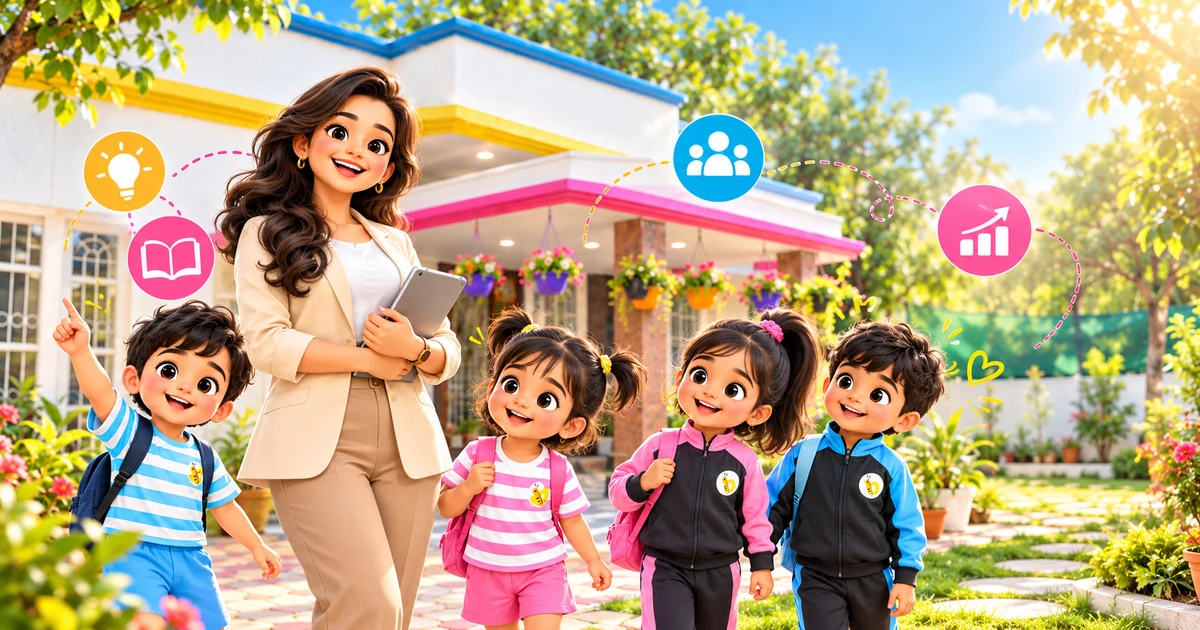
Joyful Learning in Preschool
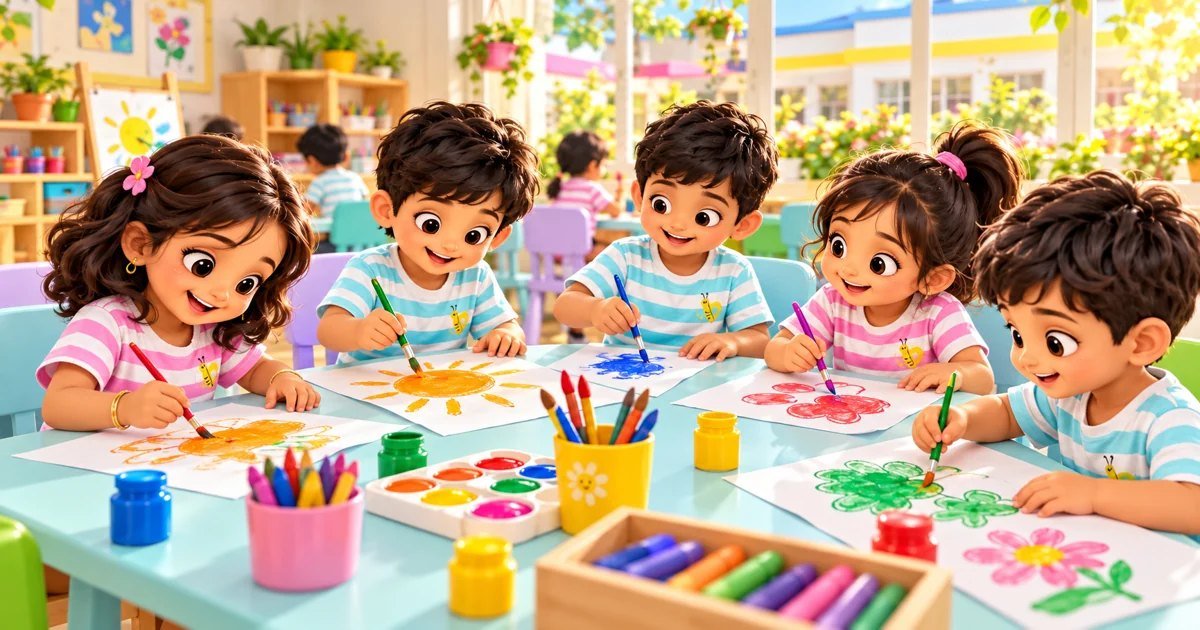
"A joyful classroom gives children room to enjoy discovery, make mistakes, and ask for help."
Learning through play
A welcoming classroom gives children room to enjoy discovery, make mistakes and ask for help.
Kinderbee International Preschool 4 min read
Illustration inspired by Kinderbee’s school setting and uniforms.
Joyful learning combines curiosity, meaningful participation and supportive relationships. In preschool, it might look like children testing a ramp, acting out a story or returning to a puzzle. It does not mean that children must smile all day or that every experience must be easy.
In this guide
When choosing a preschool, it is natural to notice colourful rooms and exciting activities. Look, too, at what happens when a child hesitates, disagrees or becomes frustrated. The adult's response tells you something important about the learning environment.
Joy begins with belonging
A child needs ways to join in that fit their interests and abilities. One child may enjoy singing in a group; another may first listen from a familiar adult's side. Both can participate meaningfully.
Consider a classroom story session. Children might speak, point to a picture, make a sound or use a gesture to contribute. Recognising these different responses gives more children a place in the conversation.
The National Association for the Education of Young Children describes developmentally appropriate practice as supporting joyful, engaged learning through a strengths-based, play-based approach. This connects enjoyment with thoughtful teaching, rather than entertainment alone.
Give children something worth exploring
Follow a question
If children notice ants near a path, their questions might lead to observation, drawing and stories. Adults can help investigate without turning every discovery into a rapid series of quiz questions.
Offer manageable choices
“Would you like to build with blocks or draw your idea first?” gives children a real decision within an organised environment. Unlimited options can be overwhelming; a small, accessible selection is often more inviting.
Leave time to return
A child may want to rebuild yesterday's tower or retell a favourite story. Repetition gives room to try a different approach. A constantly changing timetable can interrupt that opportunity.
Challenge can belong in a happy classroom
Joy and frustration can occur in the same activity. A construction falls; two children want the same role; a drawing does not match the idea in someone's head.
An adult can acknowledge the difficulty and offer useful support: “That roof keeps sliding. Shall we look at the base?” The child does not need to be rescued from every setback or pushed to continue when overwhelmed. Sometimes a pause is the most helpful next step.
What to notice on a preschool visit
Ask for a recent example. A specific account of how an activity changed in response to children is more informative than a promise that every child is always happy.
Illustrated storytelling activity inspired by Kinderbee’s Curtain Call theme.
TRY IT TOGETHER
Follow one small interest
Notice something your child chooses to revisit: buses, shadows, a rhyme or pouring water. Offer one suitable material or question that extends it. Let your child decide whether to continue; there is no finished product to achieve.
Parents often ask
Can a joyful classroom have routines and rules?
Yes. Predictable routines and clear, kind boundaries can help children know what to expect. Choice can sit comfortably within that structure.
Should I worry if my child says preschool was boring?
Ask about a particular moment without rushing to correct the feeling. If the comment repeats, discuss interests, participation and the daily routine with the teacher.
Joyful learning leaves space for the whole child: curiosity, uncertainty, enthusiasm and the satisfaction of trying again.
Sources and further reading
Ask about a typical day
Talk with Kinderbee about how play, routines and children's interests come together in the preschool day.
Related Publications in Early Pedagogy & Parent Trust
Project Walls in Preschool: Making Learning Visible
Engaging Parents Taking Parents Along in Their Child's Learning Journey at the Preschool!