Phonics and Early Literacy: How Children Grow from Sounds to Confident Reading
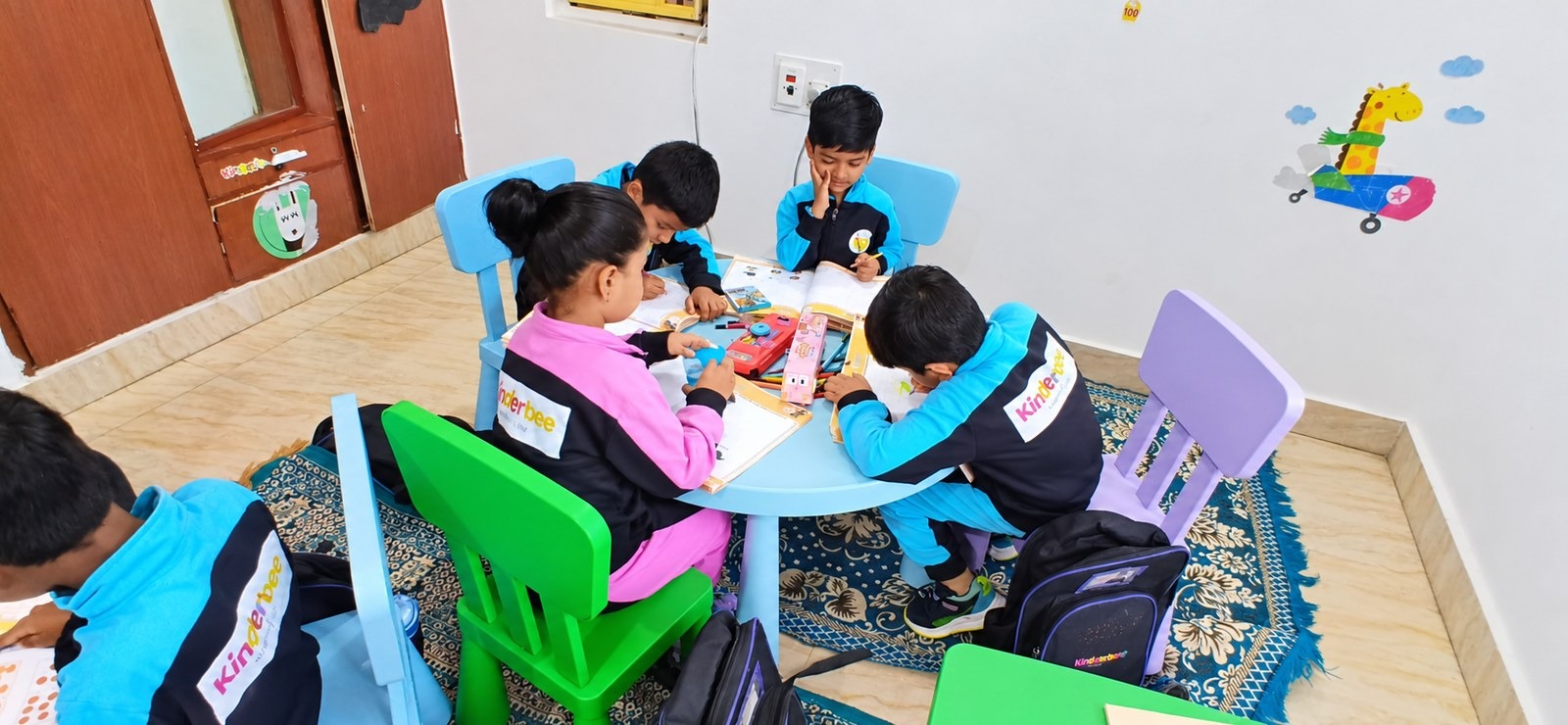
"Before sentence writing comes listening, speaking, sound awareness, vocabulary, stories, print curiosity and plenty of meaningful practice."
Parents sometimes expect preschool literacy to look like pages of copied letters. In reality, confident reading and writing grow from a much wider foundation: oral language, listening, songs and rhymes, sound awareness, stories, vocabulary, fine-motor experience and gradual understanding of how sounds connect with print.
Start with language children can use
Conversation is literacy. When children describe what they built, retell a story, ask questions or explain a picture, they are organising ideas and practising vocabulary. These oral-language experiences make later reading comprehension more meaningful.
Read-alouds also expose children to sentence patterns and words they may not hear in everyday conversation.
Phonics connects sounds and symbols
A systematic phonics approach helps children notice the relationship between speech sounds and written letters or letter combinations. In preschool, this should be age-appropriate and connected to listening, games, songs, stories and hands-on word play.
The goal is not to rush children into long spelling lists. It is to build an increasingly secure understanding of sounds and print.
Blending and segmenting are important bridges
Blending means putting sounds together to hear a word; segmenting means hearing the separate sounds within a word. These skills can be practised orally before a child is expected to write independently.
A playful teacher may use picture cards, objects, movement or sound games so that the child is thinking and responding rather than only repeating.
Writing grows through the hand and the mind
Drawing, clay, threading, blocks and other fine-motor experiences support control, while mark-making and invented spelling help children understand that their ideas can be represented on paper. Correct formation becomes easier when it is introduced alongside meaningful language.
Families can support early literacy by reading together, noticing environmental print and letting children talk about stories—not by turning home into a second tuition class.
Try it together: Choose three familiar objects. Say each word slowly and ask your child to listen for the first sound. Keep it playful; stop while it is still enjoyable.
Questions readers often ask
Should a preschooler be writing full sentences?
Some older kindergarten children may begin sentence writing, but development varies. Strong oral language, sound awareness, vocabulary and meaningful mark-making remain important foundations.
Is phonics the same as memorising letter names?
No. Phonics focuses on relationships between sounds and written symbols. Letter names are useful, but sound awareness and blending are central to early decoding.
Ask how literacy develops across the programme
At Kinderbee, ask to see how stories, vocabulary, phonics, handwriting readiness and early writing are connected rather than taught as isolated drills.
Explore Early Literacy at Kinderbee →
Sources and further reading
Related Publications in Early Pedagogy & Parent Trust
The Zero-Royalty Edge: What It Changes for a Preschool Entrepreneur
A Financial Blueprint for Starting a Premium Preschool in India