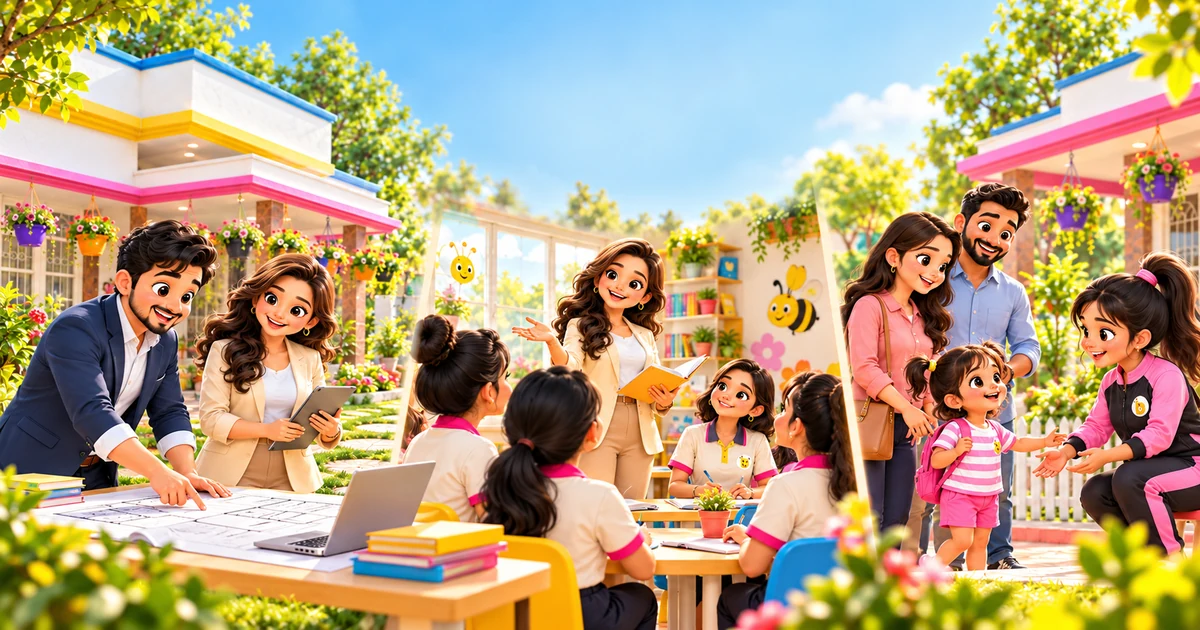
A Financial Blueprint for Starting a Premium Preschool in India

"Budget by function—not by guesswork—with a practical framework for premises, learning spaces, staffing, launch and working capital."
The cost of opening a preschool can vary sharply by city, property condition, capacity and positioning. A useful budget therefore begins with categories and assumptions, not a single all-India number. The goal is to know what must be funded before opening, what recurs every month and what can be phased after admissions begin.
1. Separate setup cost from monthly operating cost
Setup cost may include deposit, interiors, child-safe furniture, learning materials, signage, safety work, IT, licences and pre-opening marketing. Monthly operating cost usually includes rent, salaries, utilities, consumables, cleaning, maintenance, digital services and local promotion.
Keeping these two buckets separate prevents a common planning error: spending heavily on launch aesthetics and leaving too little cash for the first months of operation.
2. Build the learning environment around the child
A premium preschool does not require expensive decoration in every corner. It requires safe movement, age-appropriate furniture, accessible materials, calm reading and role-play spaces, hygiene facilities and an environment teachers can actually use. Spend first on safety, function and durability; decorate after those needs are met.
KIPS partners should connect the fit-out plan to programme requirements so that classroom design supports the learning routine rather than competing with it.
3. Staff for quality before you staff for scale
Teachers and care staff are not an afterthought. Plan recruitment lead time, induction, training, uniforms, statutory obligations and substitute coverage. A weak staffing budget often creates higher costs later through turnover, inconsistent parent experience and repeated recruitment.
When enrolment grows, staffing should grow in line with the centre’s approved deployment standards and local requirements.
4. Reserve working capital
Admissions rarely arrive in a perfectly smooth line. Hold a working-capital reserve that can cover essential costs while the centre builds awareness and trust. Use conservative fee-collection assumptions and include seasonality.
If you are borrowing, model the repayment separately from operating expenses so that you can see whether the centre itself is healthy before financing cost.
5. Create three scenarios
Prepare a conservative, expected and stretch scenario. Change enrolment, rent, staff cost and marketing spend in each. The purpose is not to predict the future precisely; it is to understand which assumptions have the greatest effect on cash flow.
A franchise conversation becomes more useful when you can say: ‘This is my space, this is my monthly fixed cost, this is the fee range in my neighbourhood, and this is the number of admissions I need to cover operations.’
Budget worksheet: Create six rows: premises, fit-out & safety, learning resources, people, launch & marketing, and working capital. Add a 10–15% contingency to your setup estimate rather than assuming every quotation will remain unchanged.
Questions readers often ask
Should I choose the property before speaking to the franchise team?
It is usually safer to discuss location, usable area, access and basic feasibility before committing to a major lease or fit-out.
What cost should never be cut first?
Avoid compromising safety, teacher readiness, hygiene and essential learning resources. Decorative upgrades can often be phased; core quality cannot.
Turn your budget into a centre plan
Share your proposed city, space, capacity and budget range with KIPS for a feasibility discussion before you make major property or fit-out commitments.
Related Publications in Franchise & Business Growth
The Zero-Royalty Edge: What It Changes for a Preschool Entrepreneur

7 Questions to Ask Before Choosing a Preschool Franchise