Screen Time vs. Sensory Play: Helping Preschoolers Reconnect with the Real World
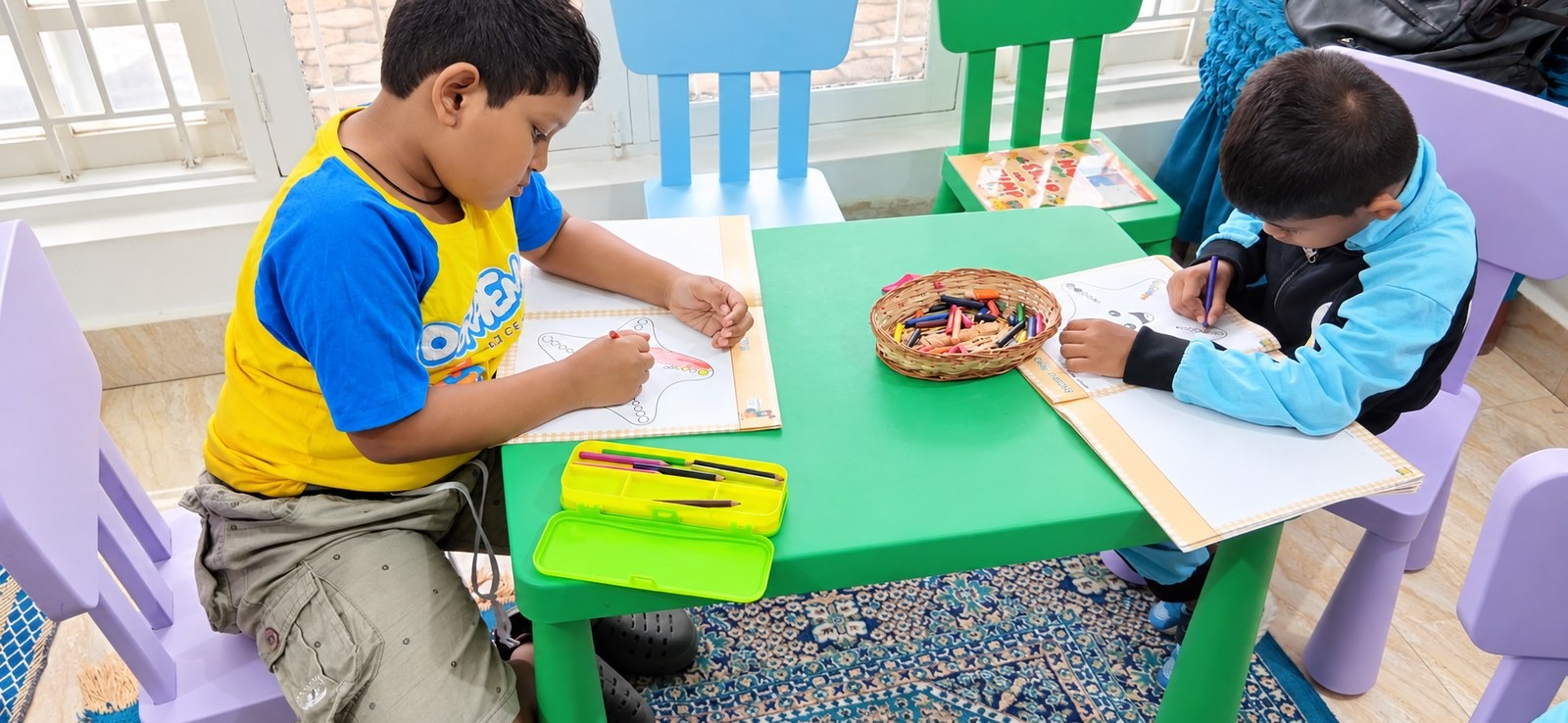
"The goal is not a screen-free family. It is to protect enough time for movement, talk, touch, imagination, sleep and shared experiences."
Screens are part of modern family life, but young children also need rich experiences that no app can fully replace: carrying, pouring, building, drawing, climbing, listening, pretending, negotiating with friends and talking with adults. A balanced routine protects those experiences instead of making every quiet moment digital.
Ask what the screen is replacing
A short video is different from hours of passive viewing that replaces conversation, movement, outdoor time or sleep. Rather than counting only minutes, parents can ask: What did my child not get to do because of the screen today?
That question leads to practical decisions without turning technology into a family battle.
Sensory play builds real-world information
Water, sand, dough, leaves, fabric, blocks and everyday objects give children information about texture, weight, shape, cause and effect. When adults add simple language—‘rough’, ‘smooth’, ‘heavier’, ‘full’, ‘empty’—the activity also supports vocabulary and thinking.
Sensory play does not require expensive kits. Household materials, used safely and with supervision, are often enough.
Movement changes the quality of attention
Young children are designed to move. Carrying, balancing, dancing, jumping and outdoor play develop the body while also giving children chances to follow rules, manage impulses and solve small problems.
After active play, many children are more ready for a story, puzzle or quiet conversation than after prolonged passive viewing.
Use technology intentionally
Families can choose short, age-appropriate content and, where possible, watch together and talk about it. A screen can sometimes introduce an idea; real life can then extend it. After a video about animals, for example, children might imitate movement, sort toy animals or draw a habitat.
The purpose is to keep adults and children connected to the experience rather than letting the device become the default activity.
A simple swap: Choose one predictable screen moment this week and replace it with a 15-minute ‘real-world tray’: cups and water, dough and tools, leaves and magnifiers, or blocks and toy animals.
Questions readers often ask
Do we need to eliminate screens completely?
Not necessarily. Families can focus on age-appropriate, intentional use while protecting sleep, physical activity, conversation and hands-on play.
What if my child asks for the phone whenever they are bored?
Offer a small set of easy alternatives and tolerate a little boredom. Children often need time before they begin their own play idea.
Make room for hands-on childhood
Kinderbee’s play-based approach gives children regular opportunities to move, make, explore, talk and learn through real experiences.
Related Publications in Early Pedagogy & Parent Trust
The Zero-Royalty Edge: What It Changes for a Preschool Entrepreneur
A Financial Blueprint for Starting a Premium Preschool in India