The Zero-Royalty Edge: What It Changes for a Preschool Entrepreneur
"A practical look at what a zero-royalty model can change—and what a prospective preschool partner should still evaluate before signing."
A zero-royalty preschool model changes one important part of the economics: instead of paying an ongoing percentage of revenue as royalty, the operator can plan around the agreed licence and service costs. That can create more room to reinvest locally—but it does not remove the need for disciplined budgeting, quality standards or strong admissions execution.
Start with the right question: what exactly is ‘zero royalty’?
In a conventional franchise, a brand may charge an ongoing royalty linked to revenue. Kinderbee publicly positions its franchise model as a no-royalty model. For an edupreneur, the useful question is not simply ‘Is there a royalty?’ but ‘What are all the recurring and one-time commercial obligations?’
Ask for a written commercial schedule covering licence, curriculum and portfolio materials, training, technology, marketing, renewals, taxes and any minimum purchases. A transparent cost map is more valuable than a headline claim viewed in isolation.
Why reinvestment matters in a preschool
Early-years quality is visible in everyday details: trained teachers, safe materials, maintained classrooms, parent communication and consistent learning experiences. When a model does not take a percentage of centre revenue as royalty, an operator may have greater discretion to direct surplus toward staff development, local marketing, learning resources and centre improvement.
That flexibility should be treated as a responsibility, not as guaranteed profit. A strong centre still depends on local demand, sensible rent, staffing ratios, pricing, admission conversion and careful control of working capital.
What KIPS adds beyond the commercial model
Kinderbee’s KIPS partnership is designed as an integrated operating and academic system rather than a logo-only licence. The support ecosystem described by the brand includes play-based curriculum, daily lesson planning, teacher development, portfolio and progress documentation, parent engagement, operational guidance and marketing direction.
For a prospective partner, the value of that system should be tested through concrete questions: What is supplied before launch? What continues monthly? What must the operator execute locally? Which deliverables are included and which are separately charged?
Use a five-line viability test before you commit
Write down five numbers for your proposed centre: realistic enrolment at break-even, monthly fixed cost, staff cost, expected fee collection and a six-to-nine-month working-capital cushion. Then test the model under conservative admissions, not only an optimistic full-capacity scenario.
The best franchise decision is one where educational quality and business discipline reinforce each other. Zero royalty can be an advantage, but the centre still needs to earn parent trust every day.
Investor check: Before comparing franchise fees, compare total four-year cash outflow, what support continues after launch, and which costs rise as enrolment grows. Ask for every charge in writing.
Questions readers often ask
Does zero royalty mean there are no other fees?
No. Zero royalty normally refers to the absence of a revenue-linked royalty. Licence, materials, training, technology, taxes or other agreed charges may still apply. Review the current written commercial schedule.
Does a zero-royalty model guarantee higher profit?
No. Profitability depends on admissions, pricing, occupancy, rent, staffing, local competition, cost control and execution. The model changes the cost structure; it does not guarantee a result.
Explore the KIPS partnership model
If you are evaluating a new preschool or a rebrand, ask the KIPS team for the current commercial schedule, support scope and centre-readiness process before you invest.
Related Publications in Franchise & Business Growth
A Financial Blueprint for Starting a Premium Preschool in India
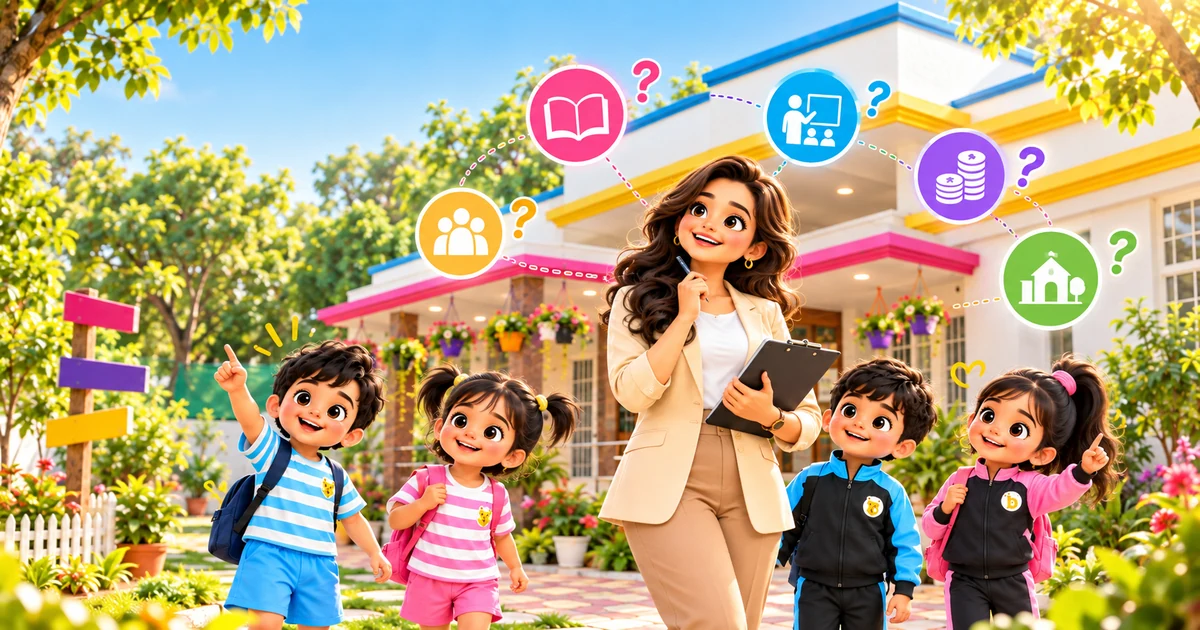
7 Questions to Ask Before Choosing a Preschool Franchise